The Whole Earth Catalog (WEC) really was as cool as people say – if you were into DIY culture, self-sufficiency, and an early, almost proto-internet vision of knowledge-sharing. It was a mix of a Sears catalogue for hippies and an anarchist’s manual for building a better world. Published by Stewart Brand from 1968 to 1972 (with later editions), it offered tools, books, and ideas on everything from geodesic domes and organic farming to computers and consciousness expansion. Steve Jobs famously called it “Google in paperback form.”

Counterculture to Cyberculture
But did it really turn counterculture into cyberculture? Arguably yes, and here’s why:
Decentralisation and Network Thinking
WEC wasn’t just about stuff – it promoted an ethos of access to tools and empowered individuals. This do-it-yourself mentality translated directly into early internet culture, where decentralised information-sharing was key.
Early Tech Utopianism
Many people in the ’60s counterculture saw computers as tools of oppression (used by the government and corporations). But WEC showcased computers as liberatory tools – a radical shift in perspective. This directly influenced early digital pioneers.
Influence on Silicon Valley
Many of the minds behind personal computing and the internet (like those at Xerox PARC, Apple, and later Wired magazine) were WEC readers. It planted the idea that technology could be used for personal empowerment, not just corporate control.
Direct Connection to the Internet’s Founders
Stewart Brand himself played a role in linking counterculture with emerging digital culture. He helped establish the WELL (Whole Earth ’Lectronic Link), an early online community that foreshadowed social media and open-source collaboration.
The Whole Earth Catalog didn’t single-handedly create cyberculture, but it laid the ideological groundwork. It made people comfortable with the idea that individuals could use technology to shape their own realities – exactly the mindset that drove the personal computing and internet revolutions.
Enduring Quotes from The Whole Earth Catalog
The Whole Earth Catalog was filled with memorable quotes, but a few have endured as particularly iconic. Here are some of the most famous ones:
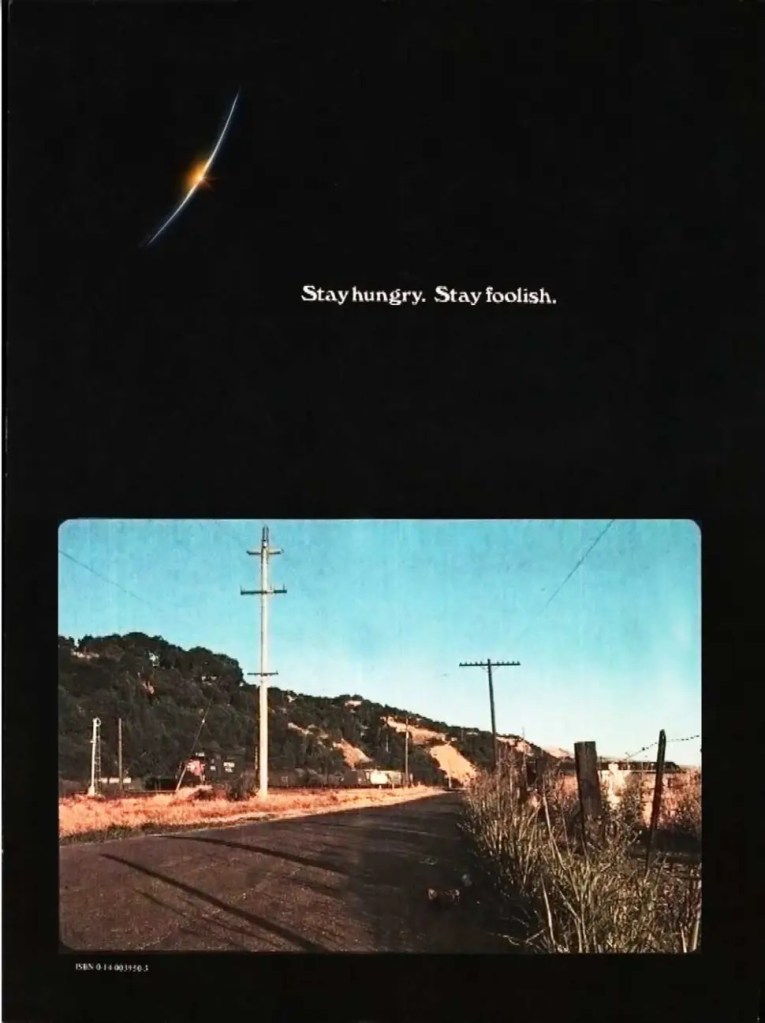
“Stay hungry. Stay foolish.”
This was the closing message of the Whole Earth Catalog’s final issue in 1974. Steve Jobs famously referenced it in his 2005 Stanford commencement speech, reinforcing its lasting influence. It captures the ethos of curiosity, risk-taking, and lifelong learning that defined both the counterculture and early Silicon Valley.
“Access to tools.”
This was the catalog’s tagline and core philosophy. It reflected the idea that with the right tools – whether physical (like a saw or a synthesizer) or intellectual (like a book on systems theory) – people could shape their own lives and environments.
“We are as gods and might as well get good at it.”
This bold opening line from the 1968 Whole Earth Catalog set the tone for the entire project. It suggested that humans had unprecedented power to shape the world and should take responsibility for using it wisely. This idea deeply influenced the mindset of tech pioneers and environmentalists alike.
“A realm of intimate, personal power is developing – power of the individual to conduct his own education, find his own inspiration, shape his own environment, and share his adventure with whoever is interested.”
This passage, from the 1968 Catalog, predicted the rise of personalised learning, maker culture, and online communities decades before they became mainstream. It seems to resonate even more today, in a world teetering on the cusp of AI-led transformation.
“Information wants to be free.”
While often attributed to hacker culture, Stewart Brand first said this in a 1984 hackers’ conference, but its roots trace back to Whole Earth Catalog ideas. The full quote: “Information wants to be free. Information also wants to be expensive. … That tension will not go away.” This concept became foundational to internet culture, influencing open-source software, digital rights movements, and the early web.
Each of these quotes reflects the Whole Earth Catalog’s lasting influence on technology, self-sufficiency, and the DIY ethos that shaped both counterculture and cyberculture.
The Karma Repair Kit
As if all that wasn’t cool enough, Richard Brautigan’s “Karma Repair Kit: Items 1-4” also appeared in the Whole Earth Catalog, specifically in the Fall 1969 issue. It was a short, playful poem offering a minimalist approach to resetting one’s karma:
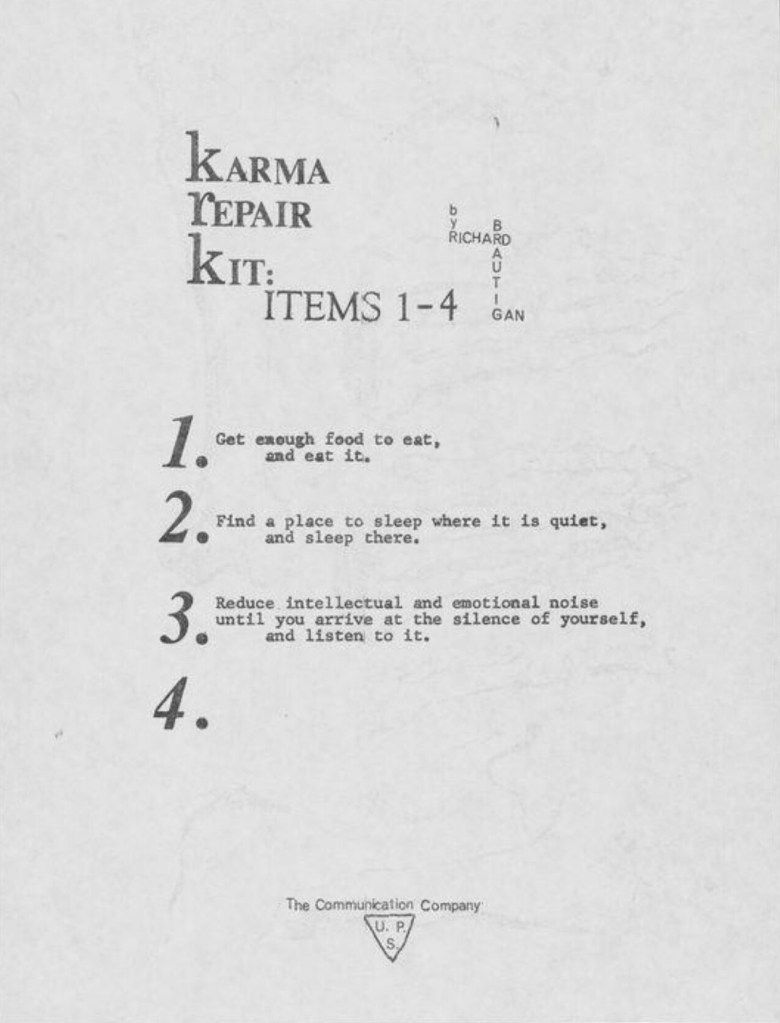
Brautigan, a poet and novelist associated with the Beat and counterculture movements, was a favorite among Whole Earth Catalog readers. His work, particularly Trout Fishing in America, resonated with the DIY, back-to-the-land ethos of the time. The inclusion of this poem in WEC reflected its mix of practical tools and spiritual/philosophical musings.
Final Thoughts
As we enter the AI age, many of the Whole Earth Catalog’s most famous quotes feel more relevant than ever. “Stay hungry. Stay foolish” is a perfect mantra for navigating an era of rapid technological change, where adaptability and curiosity are key. “We are as gods and might as well get good at it” now takes on a new weight as we create increasingly powerful AI systems that shape the world in ways we’re only beginning to understand. And the tension behind “Information wants to be free” is more pressing than ever, as debates over AI-generated content, data privacy, and open-source development intensify. The WEC’s ethos – empowering individuals with tools, knowledge, and a sense of responsibility – feels just as necessary today as it did in the 1960s.
The question is: how will we use these tools?
 bhjrnl